First Steps · the band that's built
A deep-context English immersion course.
Language, said out loud.
Children don't learn a language from word lists. They learn it inside a world: the same people, the same places, and things that matter happening in them. Outloud is that world, in English — a cast they come to know, a story they want to finish, and the child speaking at every turn. Underneath, it always knows exactly where the child is, so the next thing it gives them is exactly as hard as they can handle.
Launching December 2026
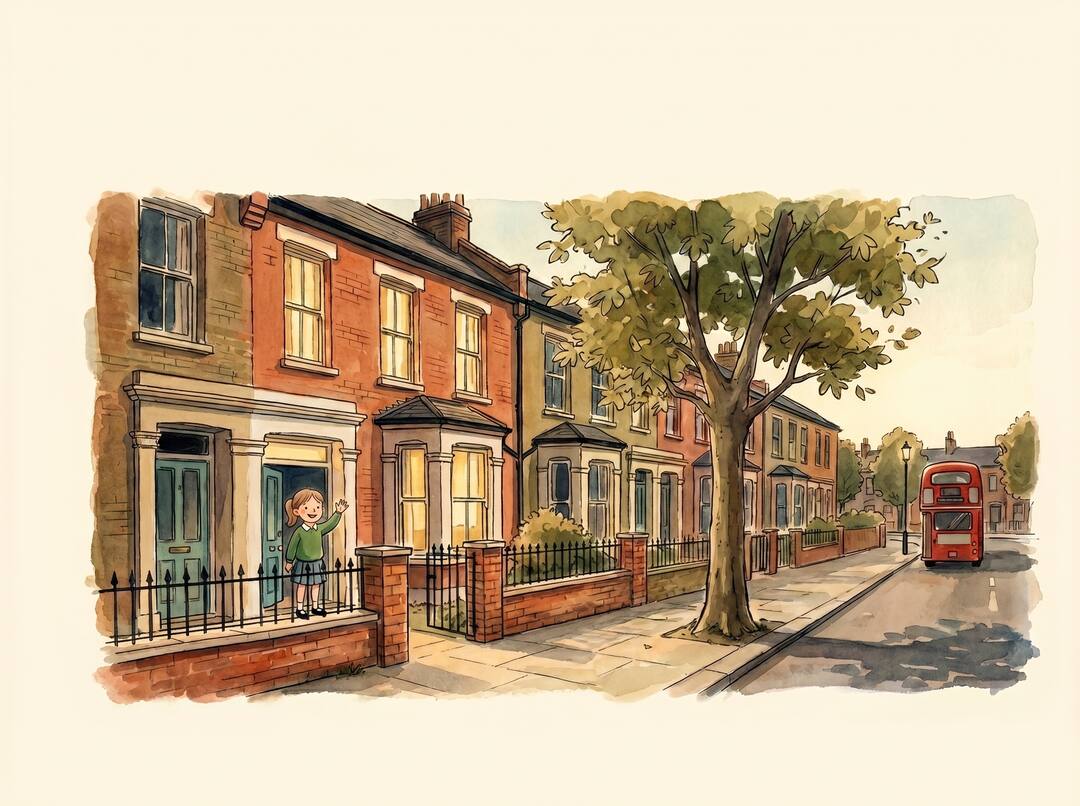
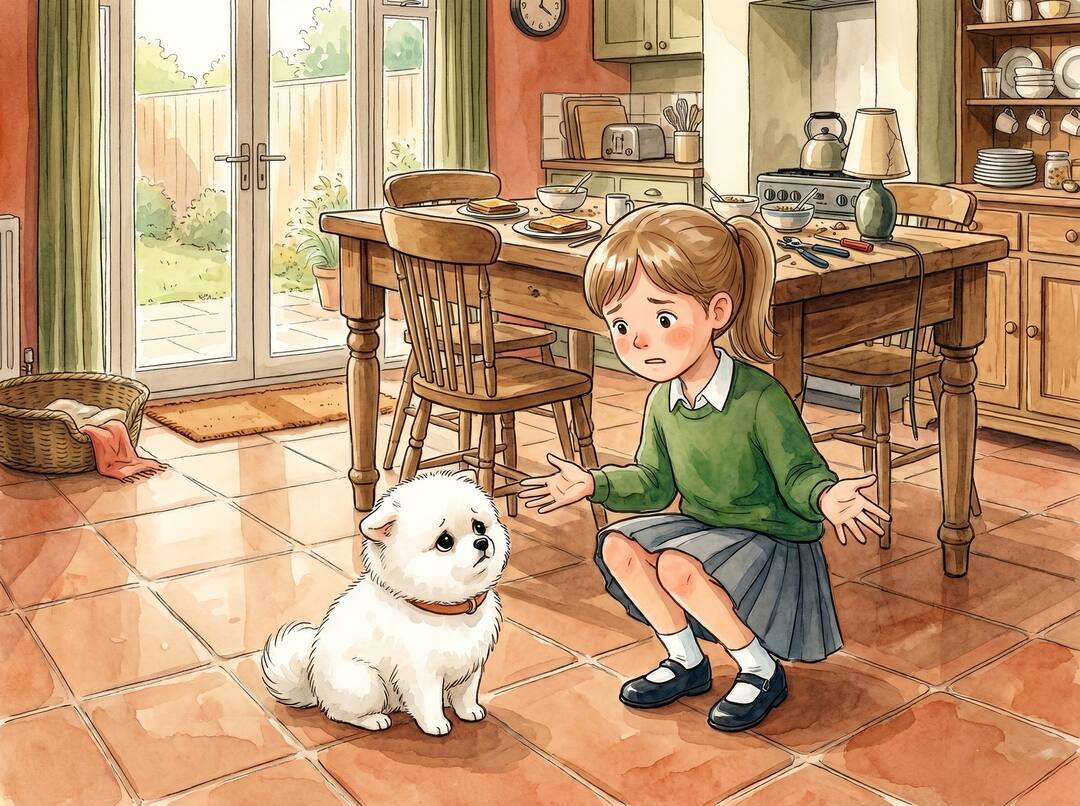
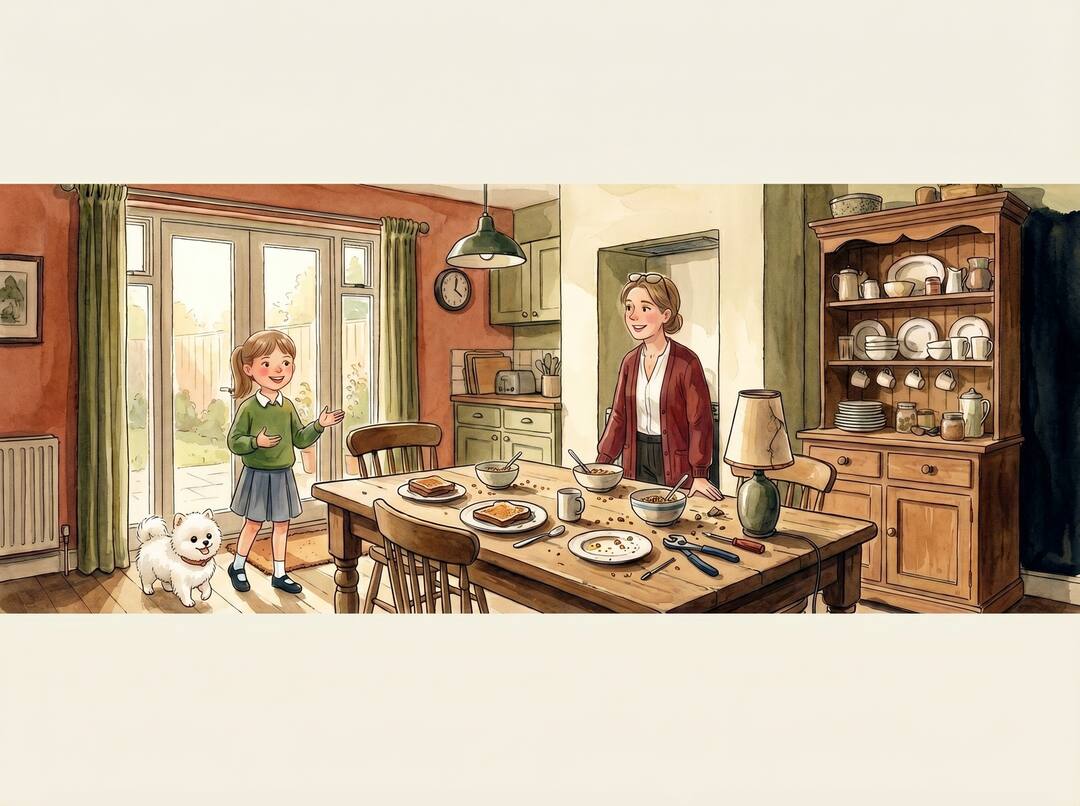

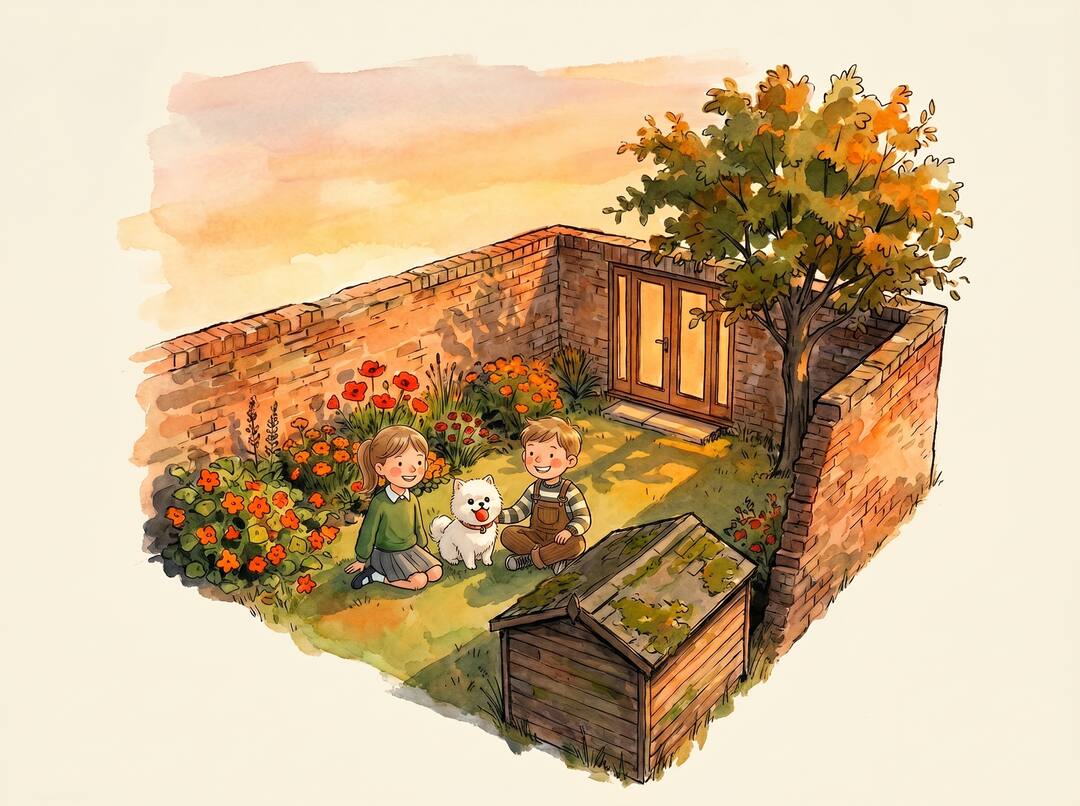
From Episode One of Elm Park — Maya, her little brother Billy, and Ocean Bear the Pomeranian. Eighteen panels, narrated, with the child speaking back at every turn.
Not drills. Immersion, in a story worth finishing.
Most English apps teach words out of context and dress the drill up as a game. Outloud is the other way round: every word arrives inside a scene, a relationship and a reason to say it. That is what deep context means — the same world and the same cast, episode after episode, so meaning builds the way it does when you live inside a language. The child only ever sees the story; the teaching is the story itself, told well enough that finishing it is its own reward.
Two layers, and the child sees only one of them. The story is the engagement layer — the reason they come back. The map underneath is the intelligence layer — a learned model of how a child's English actually develops, which knows where this reader sits and chooses what comes next. A normal storybook is inert; it doesn't know who's reading it. This one does.
The story is what the child sees. The map is how it's always exactly as hard as they can handle.
We start at the beginning, and we've built it properly.
Outloud's learning ladder runs First Steps → Walking → Running → Leaping. Today, the band that is fully authored is First Steps— a child's very first English, before the first formal exams. A phonics pre-band and twenty-three Elm Park episodes, every one with the narrative craft of a real picture book over the learning model that places the child precisely.
The bands above it are coming. We would rather show you one band done completely than four bands promised.
Under the stories is a real, mapped curriculum: more than a hundred and sixty named learning outcomes, climbed across three skills, with a gate that holds each band until a child is solid across all of them — speaking-forward, but never lopsided.
Deep-context English immersion, for children. Launching December 2026.